Friday, September 4, 2009

Sprint Becomes Second U.S. Carrier To Launch Android Phone


Sprint (NYSE: S) announced today that it will begin selling its first Android handset on Oct. 11, making it the second U.S. carrier to roll out a phone based on Google’s platform. Release.

Up until now, T-Mobile USA had been the only carrier in the U.S. to sell an Android phone. Many theorize that the Android platform won’t start see a dramatic uptake in usage without multiple handsets and carriers using the platform. A wave of announcements are nearing, especially with Motorola (NYSE: MOT) set to unveil its Android strategy next week in San Francisco.

Sprint will be selling the HTC Hero, which has been
available in Europe since early this summer.
It will cost Sprint subscribers $180 after $150
in rebates and will require a two-year contract.
They will also need an unlimited
data plan, which costs $100 a month for unlimited
minutes or $70 a month for 450 minutes. Sprint’s
Hero is the first in the U.S. to feature HTC’s user
interface overlay, called “HTC Sense.” Users will
be able to switch between “Scenes” to reflect
different roles in their lives, such as work, social,
travel and play. For example, the companies said
a work Scene can be set up to include stock
updates, work email and calendar, whereas a
play Scene could have music, weather and a Twitter.
In a release, Andy Rubin, Google’s VP of mobile
platforms, said: “Sprint and HTC are helping to
drive openness and innovation in the mobile
industry with the introduction of the Android-powered
HTC Hero.”

Some of the features and specs:

—Camera: 5 megapixel camera and camcorder.
—Email: POP, IMAP, and Exchange Active Sync
accounts.
—HTC Footprints: An app users use to chronicle
their moments by capturing a digital postcard
on their phone, and taking notes and an audio
clip of that favorite restaurant or special place
while identifying its specific location.
—HTC Hero is a full-featured smartphone with
Wi-Fi capability, a 3.2-inch capacitive touchscreen
with pinch-to-zoom capability and a fingerprint
resistant coating, integrated GPS navigation,
and trackball navigation.
—Stereo Bluetooth 2.0 Wireless technology
—accelerometer, light sensor and home screen
widgets for improved usability
—multimedia capable with microSD slot
(32GB capable, 2GB included)
—Sprint TV with live and on-demand programming
—NFL Mobile Live and NASCAR Sprint Cup
MobileSM
—easy access to social networking sites,
including Facebook®, Flickr® and Twitter
—visual voice mail for quick and easy access to
specific voice mail messages


Source : http://moconews.net/article/419-sprint-marks-second-u.s.-carrier-to-launch-android-phone/

Thursday, July 16, 2009

Acer to launch four smartphones in 2H09, say sources

Acer plans to launch four smartphones, the A1, C1/E1, F1 and L1, at the end of September and in the fourth quarter of this year, outsourcing the production to Taiwan-based Compal Communications and Inventec Appliances, according to sources at Taiwan handset component suppliers.

The A1 is an Android-powered model, while the other three are based on Windows Mobile platform, the sources noted.

Compal will manufacture the L1 on an ODM basis, while rolling out the F1 and A1 on an OEM basis, said the sources, who also indicated that Inventec will turn out the C1/E1 smartphone on an ODM basis.

Another OEM/ODM handset maker Arima Communications may join Compal and Inventec to compete for Acer's smartphone orders in 2010 as the company has also stepped into the development of smartphones based on Android and Qualcomm platforms, the sources revealed.


Acer: Revenues, 1Q08 - 1Q09 (NT$m)

Quarter

Sales

Q/Q

Y/Y

YTD

Y/Y

1Q-09

95,755

(13.3%)

10.2%

95,755

10.2%

4Q-08

110,489

(10.3%)

10.9%

418,939

31.3%

3Q-08

123,116

25.1%

40%

308,450

40.5%

2Q-08

98,446

13.3%

46.5%

185,334

40.8%

1Q-08

86,888

(12.8%)

34.8%

86,888

34.8%


Source : http://www.digitimes.com/news/a20090715PD206.html

Wednesday, July 8, 2009

Apple’s iPhone apps: 62,965 and counting (or is it?)

Apple grabbed headlines on June 8 at its Worldwide Developers Conference when it announced on June 8 that it had more than 50,000 apps on the iPhone.

That number became fixated in everyone’s heads. But now it’s time to move on. Less than a month later, there are now 62,965 apps on the iPhone, according to Mobclix. The number of games is now 13,030. Back on June 24, we noted that there 59,073 apps, including 12,403 games.

That means there are 299 apps — including 48 games — coming out every day. The acceleration is due in part to the release of iPhone 3.0 software, which as of June 16 allowed a lot of developers to release enhanced apps.

In some ways, that shows how healthy the ecosystem is. More than a billion apps have been downloaded. (That number is obsolete, as Apple crossed it on April 23). But observers are asking questions. How many of those apps are free? (There are 14,242 free apps, including 3,561 free games). How many of the billion-plus downloads are free? How much revenue are they generating? What are the profits? Who is building a sustainable business on the iPhone? Some apps makers such as Mark Pincus of Zynga have said that profits have been elusive so far on the iPhone platform.

[Update: Busted Loop says its count is much different. The company says that Mobclix is double-counting apps between categories. The real numbers should be 55,977, with 10,175 games. Go figure.]

What do the numbers mean? Apple has created a relentlessly Darwinian marketplace. New developers are piling in. Companies are developing their own tricks on how to get noticed. Production values have to be higher if the apps are to stand out. Marketing and advertising may very well become a necessity, even for apps that are viral hits. Publishers may have to get used to the idea that their apps may sell for a couple of weeks and then fall off a cliff. The numbers are stunning in a lot of ways, but I don’t think anyone fully appreciates what they mean yet.

Source: http://digital.venturebeat.com/2009/07/07/apples-iphone-apps-62965-and-counting/

Tuesday, July 7, 2009

Nokia and Symbian: Forget about Android, it’s all about Cutey (Qt)


Nokia, the world’s largest phone handset maker, is denying reports stemming from “industry insiders” that it is developing a smartphone that runs on Google’s Android software. Nokia said, “everyone knows that Symbian is our preferred platform for advanced mobile devices.”

However, the truth may be more complicated. Nokia is instead embracing something called Qt, a software toolbox for developers, which lets those developers port their applications to any of the major operating systems. At the moment, Nokia has released Qt so developers can use it while working on Linux, Max OS X, Windows, Windows CE, Embedded Linux and S60.

And Nokia should make Qt compatible with Android in the near future, we’re told.

So while it may be true that Nokia is not moving to build a device directly on Android, the end effect is that Nokia is going make it much easier for developers to build on the Android platform. That’s because Qt allows developers to work in any direction: They will be able to build on top of Qt, and then port to the Symbian platform, to the Android platform, or even the iPhone, for example.

This is part of a Nokia’s aggressive “cross-platform” developer strategy.


Nokia bought Trolltech, the company that makes Qt in January of last year for $153 million. Popular apps built with Qt include Skype, Google Earth and the Last.fm player. In January, Nokia moved to make it open source, as the company released Qt on a Lesser General Public License 2.1, essentially enabling developers to use it for free. There are still Qt licenses that aren’t open source.

(To confuse you even more, there’s also something called a Hybrid Qt, which is where a developer can build an application with both browser and native application functionality. It lets developers access a common services API and a QTCore library optimized for use with the popular browser base, Webkit. However, we’re hearing there is little activity here so far that has included Android, but that significant effort has gone into supporting Symbian, and others including Maemo, Series 40, and Desktop OSs).

The hoopla is significant because questions continue about whether Nokia may be considering ditching its existing operating system, Symbian. But the rumors, reported by the Guardian, that Nokia is unveiling a new touchscreen device at Nokia world conference in September on an Android operating system are unfounded, Nokia said.

It’s true that Nokia is under severe pressure to do something. It makes roughly 40 percent of all phones sold but has been losing its share in the market for smartphones — or those devices that can do things like surf the web and do other sophisticated computing tasks, such as email, and open and edit applications. The iPhone has been selling like hot cakes, but is proprietary. Google’s Android is also doing well, with multiple new handsets hitting the market over the next few months. But Android is open, and allows any device maker, including Nokia, to build phones on its software.

This morning, when the original story about Nokia embracing Android surfaced, we reached out to Symbian Foundation Executive Director Lee Williams (left) for comment. While he did not want to comment on whether Nokia is building on Android, deferring to Nokia for comment instead, he did say Symbian is also embracing Qt. He said it forms a key piece of the Symbian platform in 2010 and will let Symbian provide an OS that outperforms competitors (and is free and completely open). He said Qt would support Android soon. Here’s part of his email (our emphasis added in bold):

“The next generation UI for the whole Symbian platform implements a new Direct UI, preserves the world’s most widely used Focused UI, supports more screen resolutions and form factor standards, includes gesture and new sensor frameworks, and implements a collection of open and defacto industry standards, including a new QT core merged with Webkit, and yes, it exposes a strong graphics HW acceleration capability.…Qt is portable and will exist on many platforms and it would certainly be great for developers to see Qt on Android and iPhone and Windows Mobile, and…”


SOurce: http://digital.venturebeat.com/2009/07/06/nokia-and-symbian-forget-about-android-its-all-about-cutey-qt/

Motorola Woos Android Developers

The cellphone maker is investing in developers months before its Android phones launch.


It's no secret that Motorola Co-Chief Executive Sanjay Jha is betting on Google's Android mobile platform to bolster his company's faltering cellphone business.

Motorola ( MOT - news - people ) has repeatedly declined to comment on its much-anticipated Android phones. But it has been relatively open about its desire to recruit Android developers. Staffers at its MOTODEV developer network have spent the past several weeks reaching out to Android developers through weekly podcasts, meet-and-greets, and tutorials commissioned from experts.

The activities, which mostly began in mid-May and take place online, offer a glimpse of Motorola's goals for its Android devices. In a video uploaded to the developer blog in late May, Motorola's senior director of developer platforms and services, Dino Brusco, talked up Android's potential, praising the operating system's "deep integration with mobile Web services" and its "power to enable truly innovative applications." He concluded the video by saying, "We want all of you to join us in our partnership with Google and journey with Android," and noted that Motorola will help developers create, deploy and market their applications.

With the smart-phone battles increasingly hinging on the number of intriguing and useful applications available for a particular device or operating system, developer support is more crucial than ever to phone makers' success. Motorola executives confirmed in an interview that they are on the hunt for developer talent. After partnering with MOTODEV--which coordinates developer efforts across all of Motorola's businesses--to flesh out their ideas, developers will be able to distribute their apps through a variety of channels, including Google's ( GOOG - news - people ) Android Market, carrier stores, third party distributors and direct sales, says Christy Wyatt, the company's vice president of software platforms. Motorola may also install some standout applications on its phones.

Motorola believes it will offer developers two important advantages: a broad portfolio of Android devices and global distribution. The company's Android phones will span the consumer and enterprise markets and range from mid- to high-tier in pricing, says Wyatt. Some handsets will specialize in messaging and multimedia. Despite its recent woes, Motorola still has strong ties to operators around the world.

Participants generally applauded Motorola's efforts. "I've talked to a lot of folks at Motorola, and it's really an integrated effort," says Sean Galligan, vice president of business development at mobile analytics firm Flurry, which has been featured on Motorola's developer blog.

Indeed, Wyatt, who is based in Sunnyvale, Calif., near Google's headquarters, jokes that her team drops by the Internet giant's offices so often that they "probably drive [Google]crazy."

T-Mobile offers a good online forum for Android developers, says Scott Webster, head of the popular Android-centric blog, AndroidGuys. But Webster says the carrier doesn't seem "as dedicated" to Android as Motorola. "[Motorola is] answering questions, promoting Android sites and working with developers. It puts a real face to the company," he adds.

One way Motorola is getting real face time with developers is through "meet-ups" in cities ranging from Chicago to Sunnyvale to London. The company hosted about 100 Android developers in Silicon Valley in mid-June. Austin Teames, a product manager at San Mateo, Calif.-based Trilibis Mobile who organized the event, said Motorola provided meeting space, pizza and other refreshments for the developers, but didn't actively participate in the day's presentations and panels. At one point, a developer asked the employees about Motorola's Android plans. Teames reports that they politely avoided disclosing any details.

To get quality applications tailored to their upcoming phones, Motorola will need to divulge a bit more. "They can't be that active in creating developer resources until they have a device they can speak specifically about," notes Mark Chang, an engineering professor at Olin College who teaches Android development.

Wyatt says that Motorola is already working to bring Android applications to market, even if consumers won't see them until later this year. "We've been relatively quiet because we've been revamping a lot of our platforms, [but] we are definitely open for business," she says. Developers that partnered with Motorola on previous applications are being "fast tracked" through the Android process, as are some "tier one" developers from well-known firms, says Claudia Backus, Motorola's senior director of ecosystems. The public can expect to get access to Motorola's Android-specific developer tools, including software development kits, later this year.

It's too early to tell how many developers will entrust Motorola with their ideas. But if Motorola only manages to convert a sector of its own developers to Android, it will likely have plenty of manpower. The company says "millions" of developers are already involved in its broader MOTODEV network.

In the meantime, gadget blogs like Boy Genius Report keep people guessing about Motorola's device plans. AndroidGuys' Webster says he thinks two handsets, code-named Calgary and Morrison, will debut this winter on Verizon Wireless and T-Mobile, respectively. Both sport large touch-screens with sliding Qwerty keyboards, but appear to target different consumers (high-end versus entry level). AT&T ( T - news - people ) is also rumored to be getting a Motorola Android phone, and there has been chatter about Motorola crafting an Android device that can run on Sprint Nextel's ( S - news - people ) iDEN network.

Source: http://www.forbes.com/2009/07/06/motorola-android-mobile-technology-wireless-motorola.html


Blueprints af Sony Ericsson X2 her.


Sony Ericsson ”Rachael” is the codename of the Swedes' first Android-based mobile phone, that is expected to be announced later this year. It will be part of Sony Ericsson's series of XPERIA products. We've got our hands on internal documents about the phone, that seems to have the potential to be a sales success.

The phone is based on the Qualcomm QSD8250 Snapdragon platform, that enables processor speeds up to 1 GHz, and HSPA-speeds up to 7.2 Mbps. This platform will also sport great 3D graphics capabilities.

The phone's built-in camera is an 8-megapixel camera with autofocus. There's also a 3.5 mm jack connector as well as a mini-USB connector at the top of the phone. The touch screen appears to be rather large, and according to our sources its diagonal measures no less than 4 inches. As of now, we have no word on the screen resolution, but it'll probably end up at 800 x 480 pixels (WVGA) or so.

Source: http://www.mobil.nu/ArticlePages/200907/04/20090704151734_MDK719/20090704151734_MDK719.dbp.asp

Thursday, June 25, 2009

HTC Releases Third Android Phone, Sporting New Look And Flash

Taiwanese smartphone maker HTC has released its third Android phone, the HTC Hero, which has been picked up by France Telecom’s UK carrier Orange, as the first Android device in its portfolio of phones, the companies said today.

The Hero also sports the smartphone maker’s new user interface, HTC Sense. The UI, which has been two years in the making will be used in all forthcoming HTC devices, and according to the company, will help set it apart from its competitors. Sense, for example, does not organize the phone’s interface by application, but rather by a person’s contacts. Instead of digging through various applications, all communications with a contact—whether through Facebook, Flickr photos, text messages, emails, or call history—are all organized in one view.

The HTC Hero is just one of a number of Android phones launching this summer. HTC’s new interface, however, gives a hint at the level of differentiation that handset makers can achieve with the operating system. One thing that the HTC Hero is also able to support is Adobe (NSDQ: ADBE) Flash, the technology that runs much of the video on the internet today, and has so far been conspicuously absent from the iPhone. Adobe has said it is still “committed� to bring Flash to the iPhone, though it needs help from Apple (NSDQ: AAPL) to do so.

Orange UK plans to begin selling the phone in July, when it will be available to customers for free on to a 2-year £39.15 ($64) monthly plan. The plan includes 1200 any network call minutes, unlimited texts, as well as unlimited internet access. The Hero goes on sale later this summer in Asia and will be available in the US by the end of the year.


Source: http://moconews.net/article/419-htc-releases-third-android-handset

Monday, June 22, 2009

Alleged shot of Motorola Morrison for T-Mobile has us swinging wildly betwixt love and disgust


Is the world ready for a white, black, and shiny metallic blue Android phone? Well, the world may not have to be -- but we strongly suspect this picture claiming to be the Motorola "Morrison" for T-Mobile USA is real since it exactly matches the thumbnail in that leaked roadmap from a while back. We can only guess from the coloration that this is likely going to be billed as a youth device -- and Motorola's said in the past that it wants to build its Android lineup around a social networking platform, which all the kiddies are into these days -- so we're thinking this could end up being positioned below the G1 and its contemporaries / successors in T-Mobile's catalog. Would we buy it? Yeah, maybe -- the keyboard looks usable, but maybe we're still so Android-starved around here that our judgment can't be trusted.

[Thanks, Stanley]

Source: http://www.engadgetmobile.com/2009/06/19/alleged-shot-of-motorola-morrison-for-t-mobile-has-us-swinging-w/

Monday, June 15, 2009

Samsung Bigfoot : Androïd, écran AMOLED et clavier complet


Après avoir annoncé le mois dernier la sortie du prochain téléphone fonctionnant sous système Androïd, le Samsung Galaxy, la firme coréenne compte bel et bien préparer d'autres smartphones sous ce système, et pourquoi pas commercialisé ce Samsung Bigfoot.

D'après des rumeurs, ce mobile tactile possède un écran tactile de 3 pouces utilisant la technologie AMOLED. Il devrait laisser apparaître un large clavier complet QWERTY coulissant, un appareil photo numérique avec capteur de 3 Méga-pixels ainsi que la compatibilité réseau 3G, 3G+ et WiFi, en plus d'une probable puce GPS.

Prix et disponibilité : Pas encore de prix annoncé pour le moment mais il devrait être commercialisé dans le courant de l'été aux États-Unis mais pas en Europe pour le moment. Affaire à suivre...


Source: http://www.topmobile.org/actualite-3769.htm

Friday, June 5, 2009

Le dernier HTC sous Androïd en exclu chez Orange


D’après certaines informations, Orange aurait l’exclusivité de la commercialisation pour la France et l’Angleterre du 3ème mobile HTC tournant sous Androïd, le bien nommé “Hero” …

Esthétiquement, le HTC Hero ressemble vaguement au HTC Magic mais de couleur noire et le trackball de navigation en moins. En ce qui concerne le coeur de la machine, il devrait être doté de la version 2.0 d’Androïd qui apporte le support du Flash, des fonctions directes vers les réseaux sociaux ainsi qu’une interface générale plus orientée 3D.

Date de lancement prévue fin juin.

Il est à noter que le nombre de mobiles utilisant l’OS de Google (ridicule aujourd’hui en France) va considérablement augmenter.

D’après Andy Rubin, responsable du projet Androïd chez Google, il y aura entre 18 et 20 mobiles équipés de ce système d’exploitation avant la fin de l’année fabriqués par 8 ou 9 constructeurs.


Source: http://www.bemobee.com/actu-mobile/le-dernier-htc-sous-android-en-exclu-chez-orange

Tuesday, June 2, 2009

Google: Expect 18 Android Phones by Year’s End

Summer Of ‘09 Phone War update: By year’s end, there will be at least 18 phones on the market worldwide based on the Android operating system, Google disclosed for the first time Wednesday.

Andy Rubin, senior director for Mobile Platforms for Google and the spearhead of the Android operating system, said the number could be as high as 20. (That figure does not include devices made by manufacturers that use a basic Android system but have not apprised Google of its use). The 18 to 20 devices Google knows about will be made by eight or nine different manufacturers, Mr. Rubin said.

He declined to say which manufacturers will make said phones or for which wireless carriers. At present, there are at least two Android-centric phones — T-Mobile’s G1, available in the United States, and a phone called “Magic” made by HTC and available in Europe.

Mr. Rubin said that, in general, carriers will be slower to introduce Android phones in the United States than in Europe. The reason, he said, is that the domestic market is so competitive that carriers and handset makers want to create highly distinctive versions of the Android phone to give themselves an edge.

Indeed, the ramping-up of Android phones intensifies a battle among some of the world’s biggest software companies to create the operating system for the world’s phones (of which there are now 4 billion). Android goes up against a coming-soon new version of Microsoft’s mobile version of Windows; Apple’s proprietary iPhone system; the BlackBerry platform; a new Palm OS for its Pre, called WebOS; Symbian (mostly proffered by Nokia); and a host of Linux-based systems.

It is, in short, while the carriers and handset makers battle, a pitched and wide-open contest to control a new generation of higher-powered mobile devices.

For Google, what was important about Mr. Rubin’s disclosure was both what he said and where he said it. His comments came at a conference in San Francisco for developers of applications for Android phones. These are the behind-the-scenes folks who will help distinguish Android from Apple’s iPhone or the Palm Pre, the BlackBerry and Nokia app stores, etc.

On the question of apps, Mr. Rubin reinforced Google’s position that Android is an “open” platform, though, critically, that concept has some nuance to it. It goes like this: there are three flavors of Android. Each is free. But the versions place different requirements on the handset manufacturers and wireless carriers. The differing versions — and the way they’re being adopted — give an insight both into Google’s goals and to the way the market is receiving those goals.

1. The obligation-free option: device manufacturers can download a free version of Android, load it onto their devices and provide access to as many or as few apps as they want. But the manufacturers cannot preload popular Google applications, like Gmail or Google calendar.

2. The small strings option: Same as Option 1, except that manufacturers sign a distribution agreement to include Google applications on the phone. Of the 18 to 20 phones coming out this year, Mr. Rubin said, 12 to 14 subscribe to this option.

3. The bigger strings option or the no-censorship version: These phones Google calls “The Google Experience.” They are physically distinguishable by the “Google” logo on the phone. They include a range of Google applications that the carrier and handset maker agree not to remove from the phone. The carrier and handset maker also agree not to censor access to the Android market. Which means that if some developer comes up with an application that some people find distasteful, or that gets bad press, it must nevertheless remain available to consumers. Of the phones coming out this year, five or six belong to this category, Mr. Rubin said.

The third category provides risk and reward opportunities. The openness of the store could be a hit with consumers, but could also lead to poorly constructed applications or ones, like the baby-shaking app for the iPhone, that could give Google a taint (however temporary and press driven).

When it comes to apps, Mr. Rubin said: “We want to abide by the law, but not rule with an open fist.”

Source: http://bits.blogs.nytimes.com/2009/05/27/google-expect-18-android-phones-by-years-end/

Wednesday, May 27, 2009

Google geeks shaking with excitement over this week’s Android surprise

Arrogance isn’t a word you would use to describe Andy Rubin and his team of engineers who build Google’s Android software for mobile phones. Rubin, who developed handheld gadgets for Apple and Danger before Google beamed him aboard, isn’t one to call his own work revolutionary.

Until now. Four years after the Android project began in Mountain View, insiders are telling VentureBeat that we can’t miss this week’s Google I/O developer conference, which runs Wednesday through Thursday at San Francisco’s Moscone West venue. Rubin, touting Android’s ability to run the same software applications on many different phones, told CNET, “I’m actually thinking this could be a revolution.”

Don’t confuse the buzz around Google with AT&T’s rumored entry into the Android market. According to a PowerPoint slide leaked to Engadget, a phone called Lancaster is being readied for AT&T by HTC, maker of T-Mobile’s hot G1 Android phone.

It’s no surprise that AT&T has an Android project. They’d be crazy not to. One tipster alerted us to an XML file on a Taiwanese server that includes “ATT” and “Android” in its URL. (For the technically-minded: This file is a User Agent Profile. A browser sends it to a Web server so that the server can understand the device’s capabilities and limits. The specs in the file align closely with those on Engadget’s leaked slide. The browser version number, 0.6, suggests that AT&T was tinkering with Android months before T-Mobile began selling the G1.)

Is the Lancaster what has Googlers stoked for this week’s gathering? Almost certainly not. Engadget’s spy shot comes bundled with bad news in the accompanying text: AT&T insisted on replacing Google’s mobile services interface with the AT&T standard UI.

VentureBeat’s mobile reporters believe Google has something bigger on this week’s agenda. Something bigger than new Open Handset Alliance members, although we’ll bet on AT&T, Panasonic and China Unicom. Whatever it is, we’ll blog it live from Google I/O. You’ll know seconds after we do.

Source: http://venturebeat.com/2009/05/25/google-geeks-shaking-with-excitement-over-this-weeks-android-surprise/

Monday, May 25, 2009

La mission d'Android est d'organiser l'information mondiale et la rendre universellement accessible et pertinente !

Samsung_i7500_android Une récente interview sur le site web de Cnet de Andy Rubin Directeur de la plate-forme mobile de Google nous donne un aperçu de la véritable stratégie open-source pour Android, une interview qui confirme toujours la même direction : permettre à un maximum de personne d’être connecté à l’internet mobile avec un modèle publicitaire (gratuit pour l’utilisateur).

Une conférence Google I/O aura lieu dans quelques jours à San Francisco le 27-28 mai pour les développeurs autour des produits Google entre autre Android qui donnera un véritable tour d’horizon de la plate-forme, par exemple comment coder pour une meilleure gestion de l'autonomie de la batterie, Google est conscient que pour les applications mobiles les trois choses les plus importante sont : l'autonomie de la batterie, la batterie, et l'autonomie de la batterie ! Après tout, si la batterie est morte, personne ne peut utiliser votre service…….. C'est l'un des défis majeurs pour l'industrie du mobile !

Andy Rubin explique que la volonté de Google a été à un moment dans le fait de créer un seule mobile, un Google Phone mais que ce choix limite les choses à long terme et ne s’adapte pas au marché qui est que les gens souhaitent avoir un accès à l’information et cela sur des centaines de produits différents… La mission d'Android (de Google) est d'organiser l'information mondiale et la rendre universellement accessible et pertinente pour tous ! c’est un choix de société presque Utopique pour une firme quoté en Bourse qui livre une bataille sans merci….. pour être différent des concurrents comme Apple, Nokia, Microsoft et peut être Palm Google souhaite être au dessus de la mêlée pour donner aux gens l'accès à l'Internet de la manière dont ils l’attendent pour être accessible.

Andy Rubin pense que Android a le potentiel d’une solution unique qui peut répondre à de nombreux marché (netbooks,mobile, voiture,setup box….), il rappelle qu’il faut environ 18 mois pour construire un téléphone de bout en bout et que pour le moment Android est toujours dans cette phase (18mois) afin de prouver que le produit est fiable, robuste et accessible en open-source et permettre prochainement l’arrivée de toute une série de produits. Google apprend aussi un nouveau métier avec les constructeurs et opérateurs, sur le Web il rappelle qu’on peut corriger les Bugs quasiment dans l’heure par sur un mobile ou la ROM du mobile embarque une version qui doit être prête le jour J, c’est une grande différence.....

Source: http://www.servicesmobiles.fr/services_mobiles/2009/05/la-mission-dandroid-est-dorganiser-linformation-mondiale-et-la-rendre-universellement-accessible-et-.html

Thursday, May 21, 2009

L'interface Android version HTC s'appelerait Rosie


Hier, nous vous avons parlé de cette interface d'Android personnalisée par HTC. Aujourd'hui, on en apprend encore un peu plus avec de nouvelles captures d'écran et une vidéo. Apparemment cette interface réalisée par HTC s'appellerait "Rosie", et vous permet, grâce à l'utilisation de widgets (une bonne douzaine), d'avoir une page d'accueil différentes de la version Android de base.

Voici quelques widgets que l'on retrouve dans la vidéo ci-dessous : Une horloge, les favoris, les contacts, la météo, les emails, la musique, le calendrier, twitter, la bourse, footprints, etc...

Je sens qu'il sera bientôt possible de flasher nos HCT Dream ou Magic actuels avec cette ROM.

Source: http://www.mobifrance.com/news/2009-05-20/id14677/L-interface-Android-version-HTC-s-appelerait-Rosie/

Wednesday, May 20, 2009

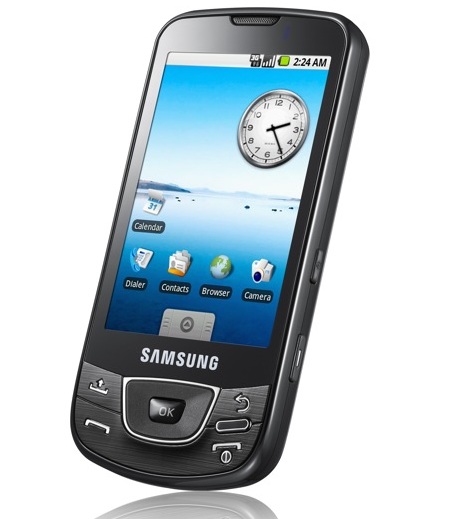
Bouygues va commercialiser le smartphone Android Samsung i7500 Galaxy


Le mois dernier, Samsung a officialisé le i7500 Galaxy, son premier smartphone utilisant Android, le système d’exploitation de Google. Et il y avait des fortes chances qu’il soit commercialisé par l’opérateur Bouygues comme on vous le mentionnait dans nos colonnes.


Et Samsung et Bouygues viennent de l’officialiser : le 3ème opérateur français commercialisera le smartphone i7500 Galaxy courant juillet.


Pas d’informations sur son prix à ce jour, mais on peut tabler sur un prix hors abonnement intéressant : en Allemagne, l’opérateur O2 aurait prévu de le vendre 300 € hors abonnement. A comparer aux 400 € demandés par SFR pour le HTC Magic (testé sur GPSAndCo) sans abonnement.

Et pour le prix avec abonnement, on peut espérer un prix à partir de 99 €.


Particularité de ce i7500, son écran, tactile, utilisant la technologie Oled comme le Samsung Player Ultra (testé sur GPSAndCo). Cette technologie permet d’avoir un écran très agréable et avec de très beaux contrastes. Cet écran a une taille de 3,2 pouces (8,1 cm) avec une résolution HVGA (320 x 480 pixels)

Autre particularité et une première pour un smartphone Android, il a un appareil photo numérique de 5 Méga pixels avec flash led, un connecteur microUSB, une mémoire interne de 8 Go ainsi qu’un connecteur jack standard 3,5 mm.


Il embarque bien sûr la version 1,5 d’Android, également connue sous le nom de code Cupcake.

Il viendra concurrencer le HTC Magic, un smartphone Android tout tactile.


Ce i7500 est prometteur, vivement qu’on le teste.


Ses caractéristiques principales :

· Quadribandes GSM (850/900/1800/1900 Mhz), EDGE, Tribandes 3G (900/1700/2100 Mhz), HSDPA (3G+)

· Récepteur GPS intégré avec puce GPS Qualcomm MSM7200A (A-GPS)

· Ecran tactile TFT de taille 3,2 pouces (8,1 cm) de résolution 320 x 480 pixels (HVGA)

· Processeur Qualcomm MSM7200A cadencé à 528 Mhz

· Appareil photo numérique 5 Méga pixels avec autofocus et flash led

· 8 Go de mémoire intégrée

· Bluetooth 2.0+EDR (AD2P)

· Wi-Fi 802.11 b/g

· Port mémoire microSD HC

· MicroUSB 2.0

· Accéléromètre

· Batterie amovible de 1 500 mAh

· Prise jack 3,5 mm

· Dimensions : 11,5 x 5,6 x 1,2 cm

· Google Android 1.5 (Cupcake)


Source: http://www.gpsandco.com/news/2009-05-19/id5851/Bouygues-va-commercialiser-le-smartphone-Android-Samsung-i7500-Galaxy/

Tuesday, May 19, 2009

Android v2.0 'Donut' Outed


While Android v1.5 - Cupcake as it is more widely known - is only now being distributed to G1 customers there's already something newer and altogether snazzier to get excited about...

Keeping up the adorable/bizarre food theme is 'Donut' the codename for the HTC Hero build which is expected to eventually become Android v2.0'. Excitingly, not only has it suddenly broken cover but there's even a hands on video now leaked to the Web.

Xda-developers forum guru Haykuro - who lives up to every middle aged person's hacker stereotype by being 17 - has followed up his outing of Cupcake by showing off Donut after getting a leaked ROM up and running on a developer edition G1. The big news: it's pretty!

Yep, Google has finally seen the need to add some much needed slap to Android's rather bare bones and Donut brings smooth animations, slick transitions, a swanky calendar redesign and a completely rejigged multimedia player which sports a look to make Apple proud. The browser gets full treatment too with animated tab switching, a more subtle progress bar and there's translucent goodness everywhere. Social networking apps are reworked as well with what appears to be native Facebook, Flickr and Twitter clients.

Just as pleasing (at least for me) is the whole walkthrough has been set to Mum's rather wonderful track 'Green Grass of Tunnel' from the 2002 masterpiece 'Finally We Are No One' but I digress.

The bad news? With the Cupcake OTA release only recently being sent to consumers I can't see Donut following any time soon. That said, when it does appear it should add a professional gloss to the highly versatile OS which may well attract a whole new audience of developers and customers.

It's also going to look mighty fine on the Samsung I7500...

Source: http://www.trustedreviews.com/mobile-phones/news/2009/05/19/Android-v2-0--Donut--Leaks/p1

Actualités Générales Bouygues Télécom plonge dans l’androsphère avec le Samsung Galaxy

Beaucoup de nos lecteurs français l’attendaient, nous avions relayé ce qui n’était qu’une rumeur mais c’est maintenant officiel.

Bouygues Télécom va commercialiser le Samsung i7500 sous le nom de Samsung Galaxy et ce dès le mois de juillet. Ce terminal est équipé d’Android, d’un GPS, de la 3G du Wifi d’un écran tactile AMOLED de 3,2” et d’un appareil de 5 millions de pixels.

En terme de forfait, celui-ci sera disponible avec le forfait Neo 2 qui commence à 35€.

On ne sait toutefois pas si il sera possible de bénéficier d’un forfait mobile et d’un abonnement aDSL à petit prix (offre Ideo) à prix réduit comme annoncé ici.

Source: http://www.frandroid.com/2696/bouygues-telecom-plonge-dans-landrosphere-avec-le-samsung-galaxy/


Apple Serious About Background App Support For iPhone 3.0 (AAPL)


Apple (AAPL) is serious about letting more iPhone software -- beyond its native apps like phone, iPod, and Mail -- run in the background, we've heard from sources in the mobile industry. This could potentially happen as soon as Apple's iPhone 3.0 release, based on scuttlebutt we've heard.

Here's two potential scenarios we've heard. Treat these as rumors for now, as we don't know how realistic they are -- especially for the first version of iPhone 3.0, due within a few months.

  • Apple might allow users to select two apps that can run in the background. Specifically, one source says there's some evidence of this in a new beta of Apple's iPhone 3.0 software developers kit. (We don't have the SDK, and wouldn't know where to look if we did.)
  • Apple might selectively allow some apps to run in the background. We assume that developers could apply for permission to run in the background, and that Apple might approve or deny them based on the resources they need, how well they behave with the operating system's stability, and how much network bandwidth they need.

Apple has so far not allowed its iPhone app developers to write software that runs in the background to avoid potential battery life and security problems -- and to avoid confusing users with a "task manager."

It's possible that this will not happen for iPhone 3.0. But it wouldn't be a complete shock if it did, either. Apple's competitors like RIM, Microsoft, Palm, and Google all support background processing for third-party apps. It's something Apple will have to support someday, even if only on new hardware. The sooner, the better.

In the meantime, Apple has developed a push notifications system that will allow apps to get a user's attention while the app is not running. For instance, an instant messaging service like AIM could use a push notification to let you know that it's received a new IM for you, prompting you to open the AIM app on your iPhone. This will be helpful even if background processing is enabled for some apps. But it's not going to be a complete replacement.

Source: http://www.businessinsider.com/apple-serious-about-background-app-support-for-iphone-30-2009-5

Wednesday, May 13, 2009

Android Aims for the Stars with Google Sky Map


As analysts go gaga over Android this week, Google is unveiling a high-tech "mobile planetarium" that could catapult the system into a whole new world. Google Sky Map was officially introduced Tuesday, just one day after researchers suggested Android was well on its way to becoming a "top-tier player" within the smartphone market.


Android Growth Predictions

First, the Android analysis: The predictions come from Strategy Analytics, which estimates Android-based smartphone shipments will surge a whopping 900 percent over the course of 2009. With multiple Android devices rumored to be on their way to America, including a mysterious, sleek-looking "T-Mobile G1 v2" phone, it's not hard to see why.

"Android has fast been winning healthy support among operators, vendors and developers," says Tom Kang, a senior analyst with Strategy Analytics.

Apple's iPhone, in contrast, is expected to grow 79 percent, Strategy Analytics says. Possible new iPhone-like devices such as an iPhone Lite or iPhone Media Pad, however, could certainly boost that figure.

Google Sky Map for Android

Astrology fans might be excited at the future guesswork, but it's astronomy fans in for the real treat with Google Sky Map this week. Originally developed under the name "Star Droid," the app lets you view a labeled map of the sky through your Android-powered phone. The program uses a combination of GPS data, compass data, and date and time information to help you identify stuff in space right from your screen.

"The result is a whole new sky mapping experience," says Googler Dom Widdows, who bears the impressive title of differential geometer.


In addition to letting you identify what you're seeing, Google Sky Map can help you search for specific stars, planets, or constellations. Type in "Saturn," for example, and your phone will direct you to its current location. The display will update as you move around, too, letting you pinpoint the planet's exact placement.

"The phone can't 'see' the stars as such -- it works out their positions mathematically from the sensor readings," Widdows explains. "It will just as reliably display stars you can't see on a cloudy night ... [or] stars you can't see because you're indoors."

Google Sky Map for Android is now available in the Android Market. You can also check it out in action via the demo video below.

Source:http://www.pcworld.com/article/164787/android_aims_for_the_stars_with_google_sky_map.html

Tuesday, May 12, 2009

Google Android Will Grow 900 Percent in 2009, Analysts Say